PP Reagent Storage Cabinet: Ideal Solution for Corrosive Chemical Storage in Laboratory
News 2025-08-14

Preview:
PP reagent storage cabinet Safe chemical storage forms the foundation of wet chemistry lab safety. Strong acid and alkali reagents cannot be stored in ordinary steel cabinets, as corrosive vapor will quickly erode metal frames. Under such requirements, [PP reagent storage cabinet] becomes a reliable choice for corrosive chemical storage. Polypropylene material is chemically inert toward most inorganic acids and alkalis. It will not react with hydrochloric acid, nitric acid, sodium hydroxide and other common corrosive lab reagents, which separates it from full steel and wooden storage options.
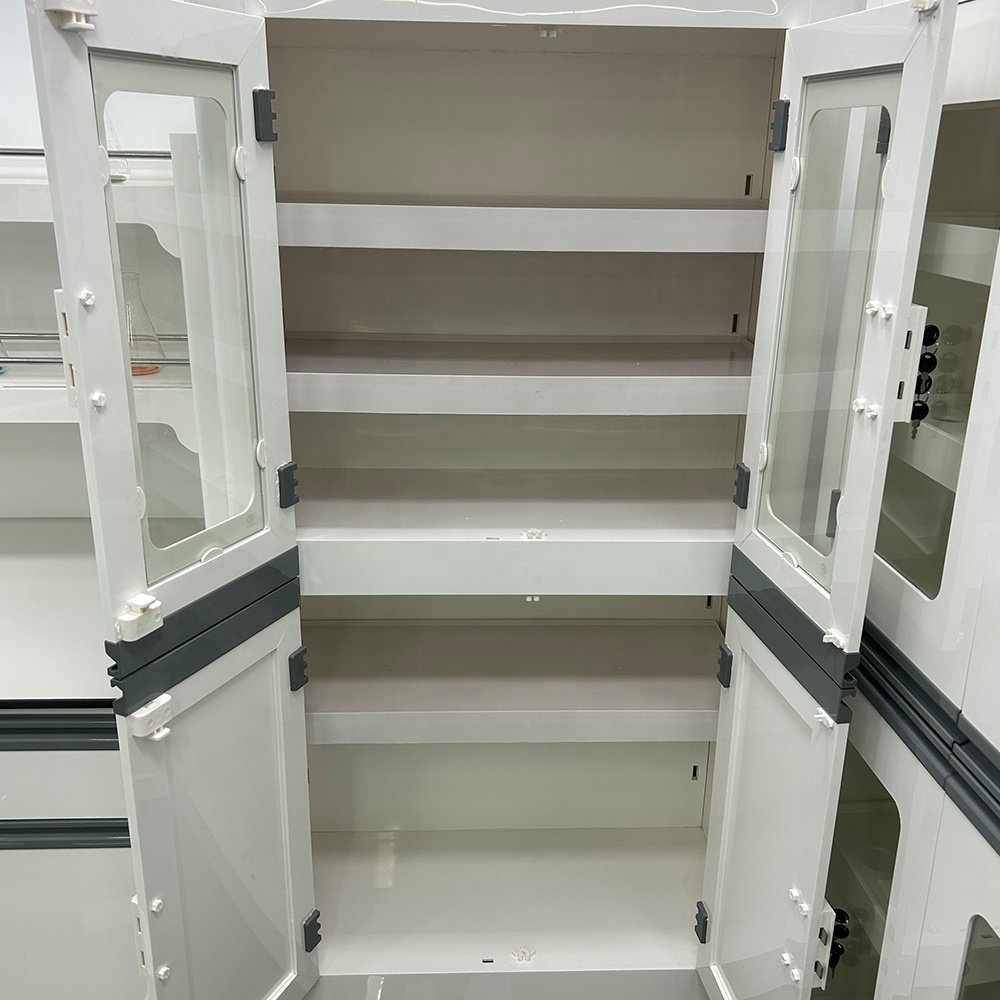
Our PP cabinet body is welded from polypropylene sheets, with no exposed metal frames inside the storage cavity. Cheaper alternatives only add thin PP liners over steel frames. Once the liner cracks, acid vapor touches the steel structure and triggers rust failure. The integrated welded PP design removes this hidden risk. Adjustable PP shelves hold reagent bottles steadily. A leak-proof sump at the bottom catches spilled liquid if bottles break, preventing corrosive liquid from spreading across the lab floor.
Ventilation design is another key feature. Even sealed reagent bottles continuously release faint vapor. The cabinet can connect to the central lab exhaust pipeline to lower vapor concentration inside, protecting the whole lab environment. Single or double door styles are available, fitted with sealing strips to reduce vapor leakage. Reserved label areas on cabinet doors help operators separate acid and alkali storage, complying with standard lab safety management rules.
This cabinet is widely used in environmental monitoring, water testing, university chemistry, geology and electroplating labs. It is important to clarify its usage limits. Polypropylene is not resistant to strong oxidizing solvents and high-temperature environments. It cannot replace flammable safety cabinets for storing combustible liquids. It also should not be placed close to heating equipment.
Compared with FRP anti-corrosion cabinets, PP cabinets are lighter and easier to process, transport and install. They deliver good value for regular acid and alkali storage scenarios. Many school labs and third-party testing institutes select this cabinet for reagent rooms. If your lab stores large volumes of corrosive chemicals, share your reagent list, bottle quantity and lab layout. We will recommend suitable cabinet sizes and supporting ventilation schemes for safe chemical management.
Full article:
The cabinet body is fabricated from 8mm solid polypropylene sheet. PP material features excellent resistance to most inorganic acids, alkalis and corrosive solvents. It will not be corroded or deformed under long-term contact with corrosive reagent fumes. The whole cabinet adopts fully welded seamless structure to avoid liquid penetration from joints.
This double-door PP cabinet has outer dimensions of 900×450×1800 mm. It is divided into upper glass door compartment and lower solid door compartment. Transparent glass doors allow quick visual check of stored bottles without frequently opening the cabinet. The internal PP adjustable shelves can be repositioned freely to fit reagent bottles of different heights. Each shelf has good load-bearing performance for placing 500ml standard chemical reagent bottles.
Safety design is built into every detail. A dual-point safety lock system is equipped to prevent unauthorized access, especially suitable for labs with students or multiple operators. Warning labels for corrosive and hazardous chemicals are pre-pasted on cabinet doors to remind users of operational specifications.
This PP reagent cabinet is widely applied in many scenarios: university chemistry teaching labs, environmental water quality testing laboratories, pharmaceutical R&D labs, food inspection institutions and industrial chemical workshops.
For lab planners and procurement managers, selecting the proper chemical storage cabinet is not only about storage capacity, but also long-term operational safety. If you have special size requirements or customized modifications for corrosive storage furniture, our engineering team can provide tailored drawings and solutions to match your laboratory layout.
Contact us to get technical datasheet, dimension drawings and quotation of our PP reagent cabinet.