Epoxy Worktop vs Phenolic Resin Worktop for Laboratory Bench
News 2026-01-14
Preview:
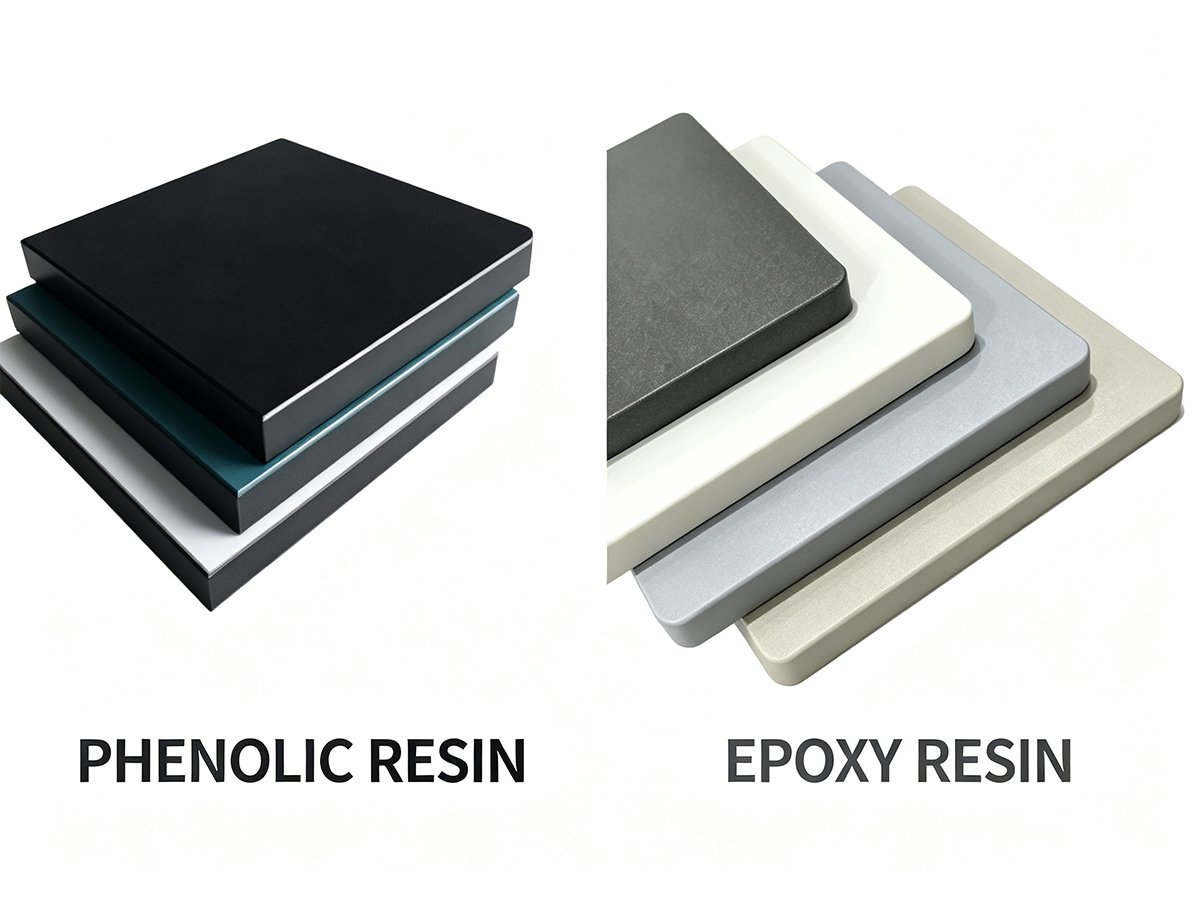
Epoxy Worktop VS Phenolic Resin Worktop
The laboratory worktop is the core working surface of any laboratory system, directly determining the lab’s durability, safety, and long-term operating cost. For most lab planners, school procurement teams, pharmaceutical factories, and industrial testing laboratories, the most common confusion is choosing between epoxy resin worktop and phenolic resin worktop. Both are mainstream high-grade lab countertop materials, but they differ greatly in heat resistance, chemical resistance, physical performance, and budget. Choosing the wrong countertop will lead to deformation, corrosion, and frequent replacement in the later stage.
1. Material Composition & Basic Features
Phenolic resin worktop is made of multi-layer kraft paper impregnated with phenolic resin, pressed and molded under high temperature and high pressure. It features high hardness, flat surface, certain anti-corrosion performance, and lightweight advantages. It is the most cost-effective standard material for conventional laboratories.
Epoxy resin worktop is integrally cast with pure epoxy resin formula, with no layered structure. The overall density is higher, the structure is more stable, and it has excellent comprehensive performance in high temperature resistance, strong corrosion resistance and impact resistance. It belongs to high-end customized laboratory countertop material.
2. Core Performance Comparison
Heat Resistance Phenolic resin worktop can withstand conventional experimental temperature below 135°C, suitable for daily teaching and routine testing experiments. Long-term high-temperature baking or open flame contact will cause surface blistering and delamination. Epoxy resin worktop supports high temperature resistance up to 180°C–200°C, with integrated anti-scald performance. It can adapt to long-term high-temperature experiments, drying equipment placement and high-intensity laboratory operations, and is not easy to deform or crack.
Chemical & Corrosion Resistance Both materials resist most conventional chemical reagents, including dilute acid, dilute alkali and conventional organic solvents. However, when facing strong acid, strong alkali and highly corrosive reagents used in chemical laboratories and pharmaceutical laboratories, epoxy resin worktop shows more stable corrosion resistance, no surface fading or erosion. Phenolic countertops are prone to surface oxidation and discoloration after long-term contact with strong corrosive substances.
Physical Durability Phenolic worktop has good scratch resistance for daily use, but it has layered structure, which is easy to absorb water and delaminate in humid environment. Integral epoxy worktop is waterproof and seamless, with strong compression and impact resistance, no layering, no water absorption, and longer service life, suitable for long-term high-frequency use of professional laboratories.
3. Applicable Laboratory Scenarios
Phenolic Resin Worktop (Cost-Effective Option) Ideal for middle and high school teaching laboratories, ordinary university basic laboratories, routine environmental testing rooms, and commercial laboratories with limited budget and conventional experimental intensity. It meets daily teaching and basic testing needs with high cost performance.
Epoxy Resin Worktop (High-Performance Option) Perfect for professional chemical laboratories, pharmaceutical R&D laboratories, medical testing laboratories, industrial quality inspection laboratories, and laboratories with frequent high-temperature, high-corrosion experiments. It is the standard configuration for high-standard professional laboratories.
4. Budget & Long-Term Cost Analysis
Phenolic resin worktop has lower unit price and lower initial installation cost, which is friendly for batch teaching lab projects. Epoxy resin worktop has a higher initial investment, but its service life is 2–3 times that of phenolic countertops, with almost no later maintenance and replacement cost. For long-term operating professional laboratories, epoxy countertops are more cost-effective in the whole life cycle.
Final Selection Suggestion
There is no absolute good or bad between the two countertops, only the most suitable one. For budget-friendly, conventional teaching and daily testing labs, phenolic resin worktop is the best choice. For high-standard, high-intensity, corrosion-resistant professional laboratories, epoxy resin worktop is the only reliable solution.
As a professional laboratory furniture manufacturer, we provide customized lab benches with phenolic and epoxy resin worktops of different specifications. We can match the most suitable countertop solution according to your laboratory type, experimental needs and project budget, and provide one-stop laboratory turnkey services.