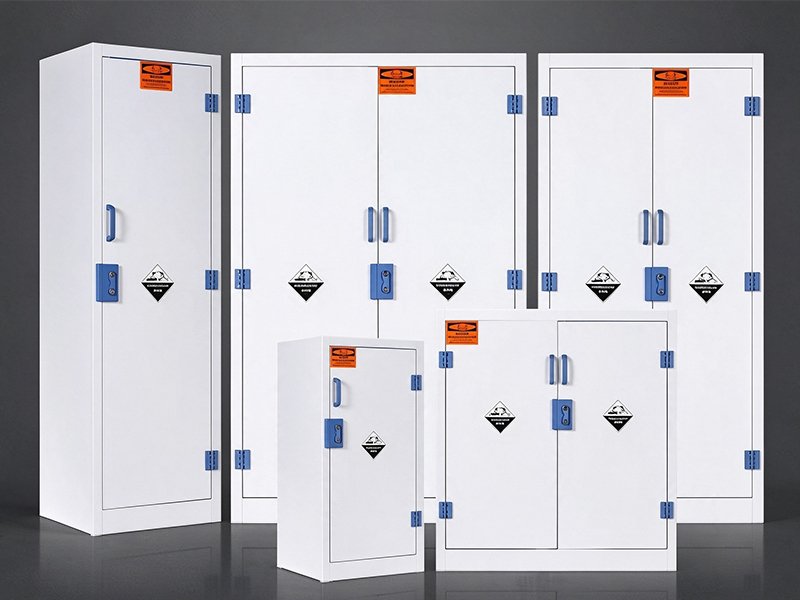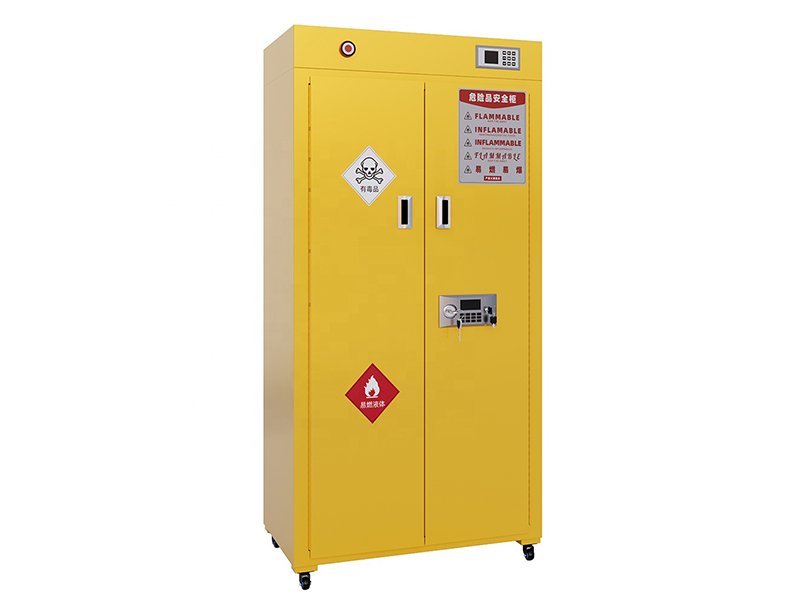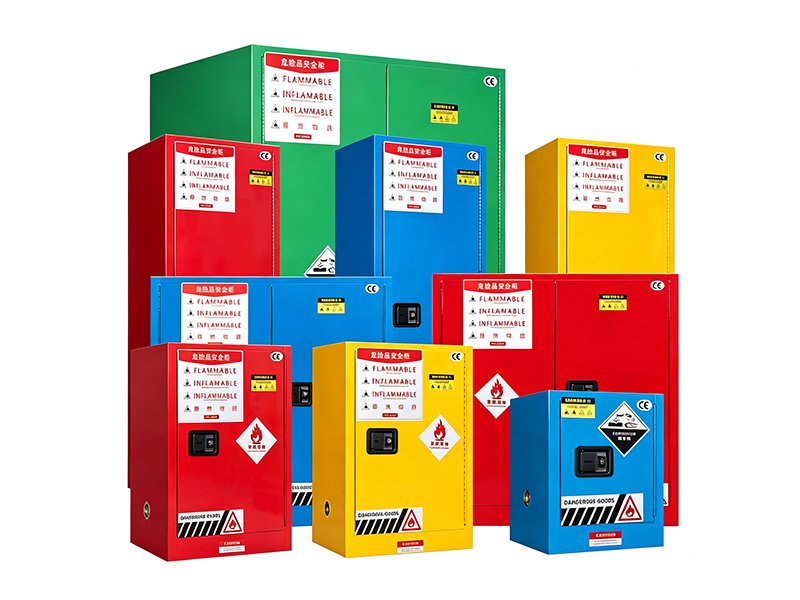


Flammable Storage Cabinet | Safety Fire Cabinet for Laboratory Flammable Liquid Storage
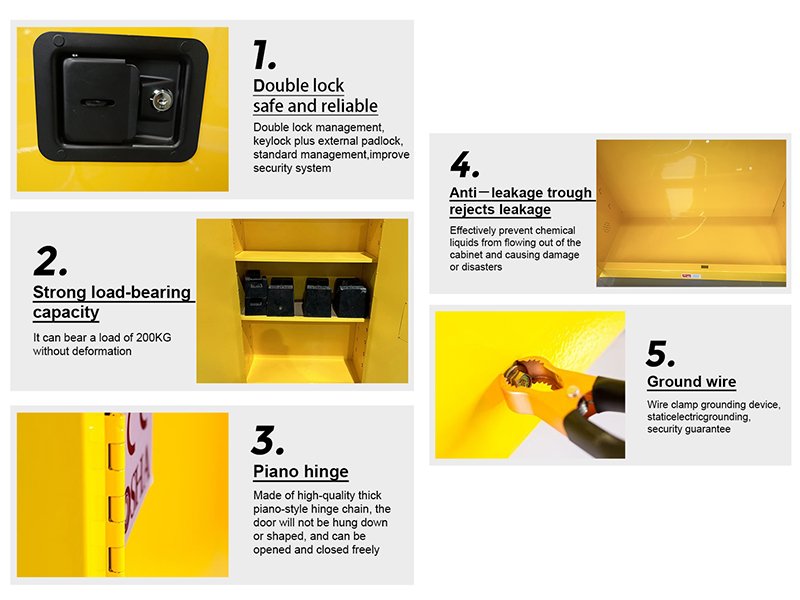
🔹Double-wall Steel Construction
Dual-layer cold rolled steel with air insulation layer, effective heat isolation in case of fire.
🔹Self-closing Door & 3-point Latching System
Automatically shut doors under high temperature; secure locking prevents unauthorized access.
🔹 Liquid Containment Sump
Built-in leak-proof bottom sump collects spilled chemicals, avoid spread of flammable liquid.
🔹 Air Venting Ports
Dual ventilation openings reduce vapor buildup, lower explosion risk.
🔹 Custom Size & Color Available
Multiple gallon capacities (4gal /12gal /22gal /30gal /45gal /60gal) for different lab demands.
Category:Lab Storage Cabinet
Product Details
Product Overview
Flammable storage cabinet is specially designed for safe storage of flammable, combustible liquids in laboratories, schools, pharmaceutical factories and chemical workshops. Constructed with double-layer cold rolled steel sheet, the air gap between inner and outer walls provides thermal insulation to slow flame spread during fire accidents.
Designed for laboratories, universities and industrial facilities, our safety cabinets provide standardized, safe storage for flammable liquids, corrosives, pesticides and various hazardous chemicals. Constructed by double-wall 18 Ga (1.0-mm) steel sheet through spot welding, (38-mm) of insulating air space for fire resistance.
Built with durable double-wall insulated steel structure, the cabinet effectively protects staff and factory facilities from potential fire hazards. It is equipped with three-point locking system, adjustable shelves and leak-proof spill trays to prevent liquid leakage risks. The built-in flame arrestor vents support external ventilation connection, and standardized safety labels achieve clear hazard identification. This cabinet enables reasonable chemical classification storage, saves chemical consumption and labor costs, and minimizes fire risks induced by hazardous chemical storage.
We supply flammable safety cabinets in various capacities, from small desktop 4-gallon model to large 60-gallon floor standing type. Yellow is the standard color for flammable liquid storage; other colors for corrosive or toxic chemical storage are optional. Custom logo and internal shelf layout can be offered for bulk orders.
When selecting a flammable storage cabinet for your lab, it is important to match the cabinet capacity to your actual chemical usage. Small 4-gallon models are suitable for desktop storage in teaching labs, while larger 30 to 60-gallon floor-standing cabinets are ideal for industrial R&D facilities with high consumption of flammable solvents.
The powder-coated steel surface resists common chemical splashes and scratches, keeping the cabinet durable for long-term daily use. Adjustable shelves allow flexible storage arrangement to fit different sizes of reagent bottles and containers. The warning label on cabinet front provides clear safety reminders for operators.
Regular maintenance will extend the service life of the safety cabinet. Inspect the door closing function and locking system periodically. Keep the ventilation openings clean and unblocked. Do not overload the cabinet or store incompatible chemicals together inside.
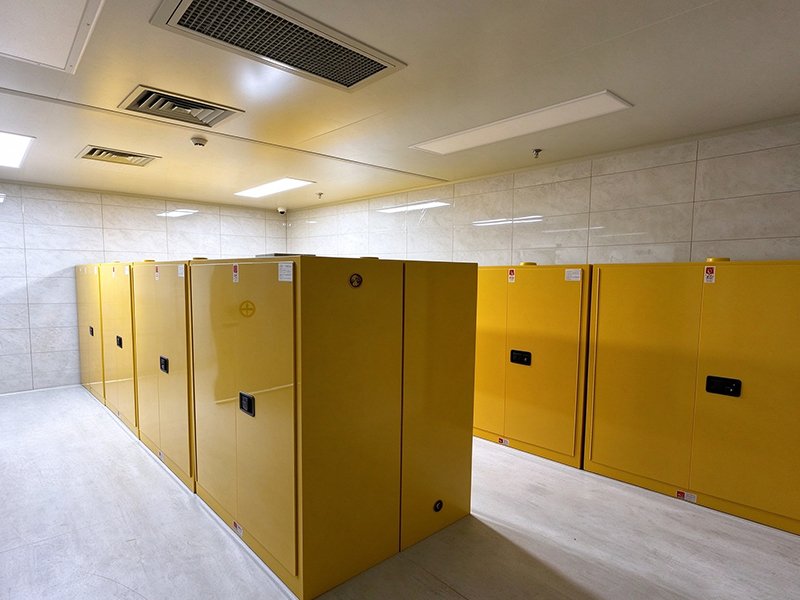
Product details overview

Self-Closing Door Device

Capacity options

| Volume | Size(H*W*D)mm | NO.Door | Shelf Pcs | Shelf bearing |
| 4 Gallon | 430*430*560 | Single | 1 | 34Kg |
| 12 Gallon | 590*460*890 | Single | 1 | 50Kg |
| 15 Gallon | 590*460*1120 | Single | 1 | 50Kg |
| 22 Gallon | 590*460*1650 | Single | 2 | 90Kg |
| 30 Gallon | 1090*460*1120 | Double | 1 | 100Kg |
| 45 Gallon | 1090*460*1650 | Double | 2 | 138Kg |
| 60 Gallon | 860*860*1650 | Double | 2 | 165Kg |
| 90 Gallon | 1090*860*1650 | Double | 2 | 190Kg |
Package
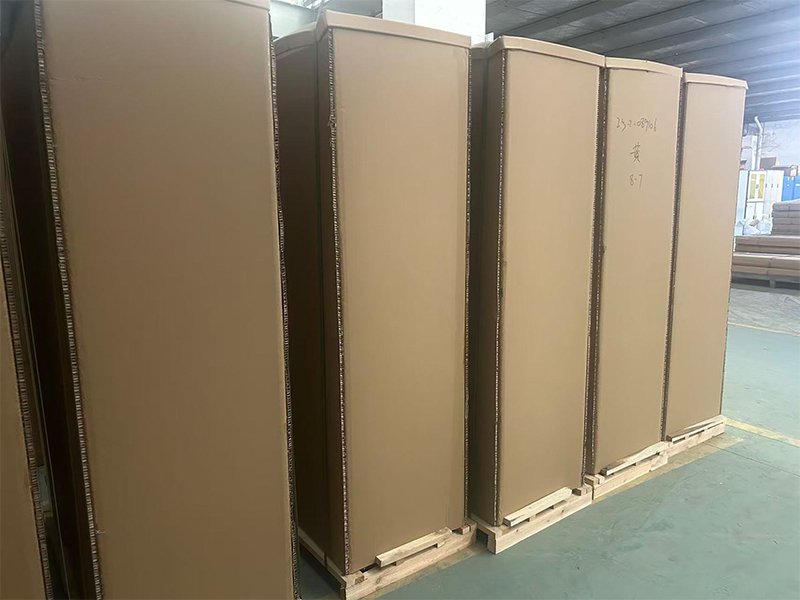
Packed with export carton and wood pallet each set.
Application
This safety cabinet is widely used in university labs, industrial R&D rooms, hospital pathology labs and chemical plants to separate flammable solvents away from ignition sources, protecting operators and lab facilities.
FAQ
Q1: Why are flammable storage cabinets yellow?
A: Yellow is the internationally recognized warning color for flammable liquid storage, to remind staff of fire risk quickly.
Q2: Can we store corrosive chemicals inside this cabinet?
A: This yellow cabinet is only for flammable liquids. For corrosive acid & base, you need polypropylene corrosive storage cabinet separately.
Q3: What is the function of the spill sump?
A: The bottom sump can contain spilled liquid, preventing flammable solvent from flowing out and contacting fire sources.
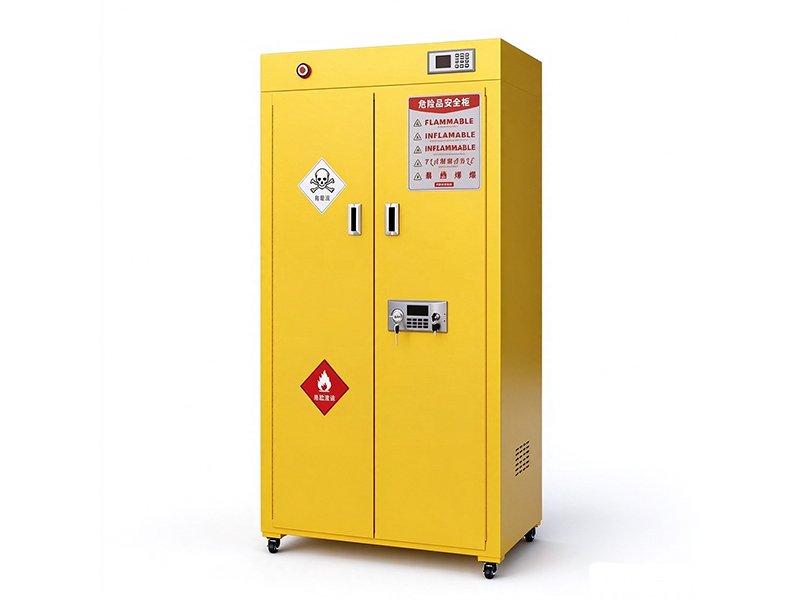
Intelligent Hazardous Chemical Storage Cabinet
Frequently Asked Questions
Product Overview
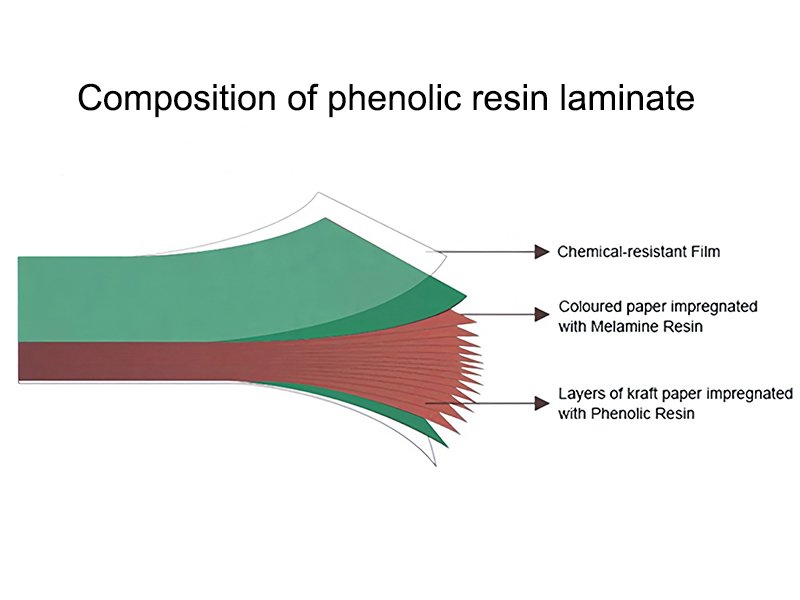
Phenolic resin sheet, also called phenolic laminate sheet or solid phenolic board, is a high-performance raw panel widely used to fabricate laboratory countertops, fume hood liners and other lab furniture surfaces. It is produced by hot-pressing multiple layers of kraft paper soaked in phenolic resin under high temperature and high pressure. This integrated forming process makes phenolic laminate sheet free of separate surface coating, which is the core advantage compared with ordinary decorative laminate.
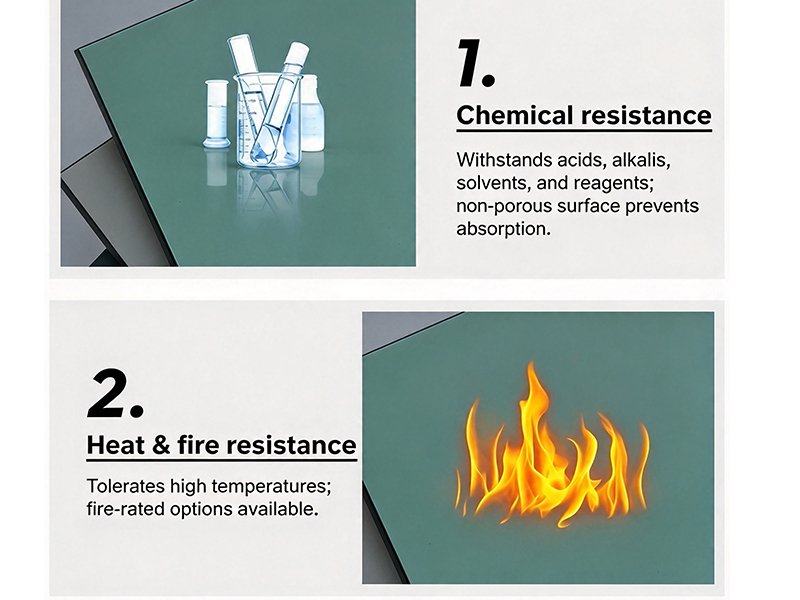
This phenolic resin sheet features excellent chemical resistance. It can withstand splashes of dilute acid, dilute alkali, alcohol, ketone and most organic reagents used in daily lab tests. The dense non-porous structure prevents liquid penetration, so the phenolic laminate sheet will not absorb water, swell, mildew or delaminate even in humid lab environments. After reagent spillage, you only need to wipe the panel quickly, and it will not leave permanent stains.
The phenolic resin sheet also has stable short-time high temperature tolerance, which can handle hot beakers and sample vessels in routine pretreatment operations. Its matte surface avoids glare under laboratory lighting. The phenolic laminate sheet is tough enough to resist scratches and impacts caused by instrument placement and frequent sample handling. No extra sealing or polishing treatment is required after cutting and installation.
We supply this phenolic resin sheet in standard big blank panels. Our customers, mostly lab furniture manufacturers and lab renovation contractors, process phenolic laminate sheet into finished lab bench tops, balance table surfaces, sink countertops and fume hood inner liners to match different laboratory layouts. Available thickness covers 12.7mm,16mm,19mm and 25mm, with optional black, grey and beige colors. We offer custom cutting, edge chamfering and drilling services according to your drawings.
All phenolic resin sheets and phenolic laminate sheets go through strict inspection before shipment to guarantee stable color and consistent physical properties for long-term lab use.
It is important to distinguish phenolic resin sheet / phenolic laminate sheet from epoxy resin worktop board. Phenolic laminate sheet is cost-effective for general chemistry, biology and testing labs with balanced chemical and heat resistance. Epoxy resin board delivers stronger continuous high-temperature performance and better tolerance to highly corrosive reagents, suitable for heavy-duty corrosive laboratories. If you need finished workstations processed from our phenolic resin sheet, please check our lab workbench. Phenolic laminate sheet is also the mainstream lining material for our fume hood.
Technical Specifications
| Item | Parameter |
| Main Material | Phenolic resin + craft paper+melamine resin, single/double side Chemical resistant film |
| Color | Black, grey, offwhite, green, blue, etc |
| Standard Size | 3660x1525mm/3040x1525mm |
| Thickness(mm) | 5-25mm (Popular:12.7mm,16mm, 19mm, 25mm, etc) |
| Features | Resistance To Corrosion,Resistance To Acid And Alkaline, Water-resistant, impact-resistant, damp-resistant,fire-resistant, cigarette burn resistant, anti UV,strong and easy to clean |
Features of Phenolic Resin Sheet

Application
Phenolic resin sheet and phenolic laminate sheet are supplied as raw panel materials for lab furniture manufacturers and laboratory engineering contractors. After fabrication, they serve as lab worktop, fume hood lining, instrument bench surface and sink countertop in university teaching labs, pharmaceutical testing rooms, food inspection centers, environmental monitoring stations, hospital labs and industrial R&D laboratories.
FAQ
Q: What is phenolic laminate sheet?
A: Phenolic laminate sheet is another common name for solid phenolic resin sheet. It is a high-pressure laminated board made from resin-impregnated kraft paper, widely used as lab furniture raw material.
Q: What is the difference between phenolic laminate sheet and epoxy sheet?
A: Phenolic laminate sheet is hot pressed laminate, cost-effective for general labs. Epoxy sheet is cast integrally, with better continuous heat and strong corrosion resistance, higher price.
Q: Can phenolic resin sheet be used inside fume hood?
A: Yes, 12.7mm or 19mm phenolic laminate sheet is a popular choice for fume hood liner.
Q: Is phenolic laminate sheet waterproof?
A: Yes, its compact non-porous laminated structure blocks liquid penetration, easy to clean spilled chemicals.
Q: Can we order custom size phenolic resin sheet?
A: Yes, we support custom cutting, edge processing and drilling for phenolic laminate sheet based on your project requirements.
Package&Delivery


Product Overview
Atomic absorption hood, also known as AAS spectrometer extractor, is a special local exhaust ventilation device for analytical instrument laboratories. Unlike flexible fume extraction arms for general chemical experiments, this hood is developed specifically for high-temperature flue gas and heavy metal smoke generated during the operation of atomic absorption spectrometers. It captures harmful hot fumes directly above the instrument flame or graphite furnace, preventing toxic metal vapors and radiant heat from spreading into the operator’s breathing zone and protecting staff from inhalation hazards.
Our atomic absorption hood is constructed from premium 304 stainless steel. Stainless steel material can withstand continuous high-temperature smoke impact, and it will not deform or age rapidly under long-term heat radiation, which is the core difference compared with PP fume extraction arms that are not suitable for high-temperature working conditions. The whole structure adopts vertical telescopic pipes, users can adjust the hanging height freely according to the installation height of the spectrometer, to keep the best suction distance and exhaust effect.
This AAS extractor adopts ceiling-mounted installation. It hangs vertically above the analytical instrument without occupying the valuable desktop operation area of the instrument bench. The air outlet on the side connects to the laboratory central exhaust duct system or centrifugal exhaust blower. Under negative pressure, the smoke generated by the atomic absorption instrument is drawn into the hood and transported to the subsequent gas purification equipment such as wet scrubber and activated carbon adsorption box for treatment before being discharged outdoors.
All pipe joints are welded and sealed carefully to avoid air leakage which would reduce suction efficiency. The inner surface is polished smoothly to reduce airflow resistance and noise during operation. The bottom suction opening adopts a wide bell mouth design, which can cover the smoke generation area of flame and graphite furnace effectively, so that the rising hot smoke will not escape sideways. We provide standard specifications for mainstream AAS instruments, and customized dimensions, flange interfaces and special heights are supported for non-standard laboratory layouts.
It is worth noting that atomic absorption hood is a fixed vertical exhaust device without rotating flexible joints. It is dedicated for analytical instruments and not recommended for random mobile exhaust at multiple experimental stations. If you need flexible local exhaust for chemical reagent mixing and sample preparation, you can choose our fume extraction arm. Both of them belong to laboratory local exhaust series and can form a complete ventilation solution together. Strict inspection is implemented before shipment to guarantee stable and long service life in analytical laboratories.

Application
Atomic absorption hoods are mainly installed in instrument analysis laboratories. They are widely matched with atomic absorption spectrometers (AAS), ICP emission spectrometers, flame photometers and other analytical testing instruments. It is used to extract high-temperature flue gas, heavy metal vapor and heat produced in flame atomization and graphite furnace atomization process. Common users include university testing laboratories, pharmaceutical analysis rooms, environmental monitoring stations, food inspection centers and mineral testing labs.
FAQ
Q: What is the difference between atomic absorption hood and fume extraction arm?
A: Atomic absorption hood is vertical fixed telescopic type, stainless steel material for high-temperature heavy metal smoke from AAS instruments. Fume extraction arm is multi-joint rotatable, usually PP material for normal-temperature acid and alkali vapor in chemical experiments. They cannot replace each other.
Q: Does this atomic absorption hood include exhaust fan?
A: No. It is only the suction hood and pipe assembly. It needs to connect to external centrifugal exhaust blower or central ventilation duct to form negative pressure for exhausting.
Q: Can it be used for organic solvent fume exhaust?
A: Yes in theory, but it is not the best choice. For ordinary organic and acid-base volatile gas, flexible fume extraction arm is more flexible and cost-effective.
Q: Can we customize the size?
A: Yes, custom total height, bell mouth diameter and outlet interface size are acceptable to match different spectrometer brands.

Product Overview
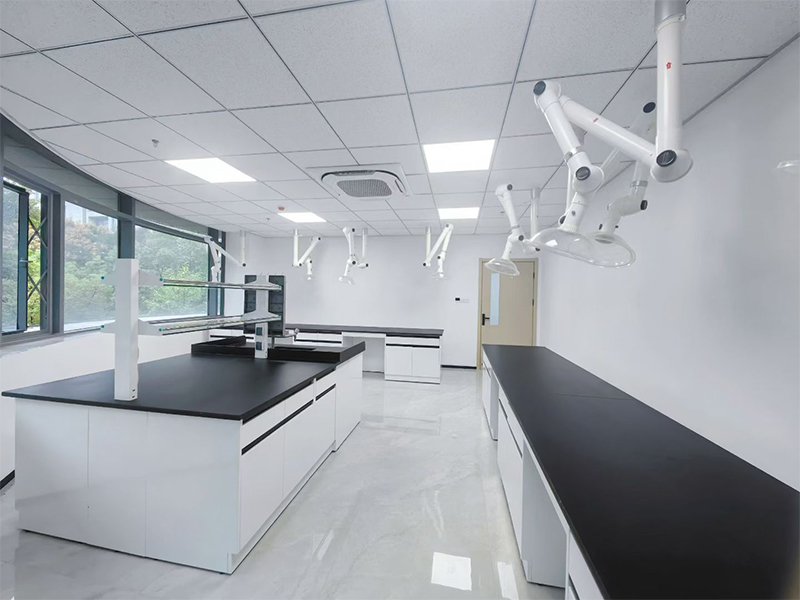
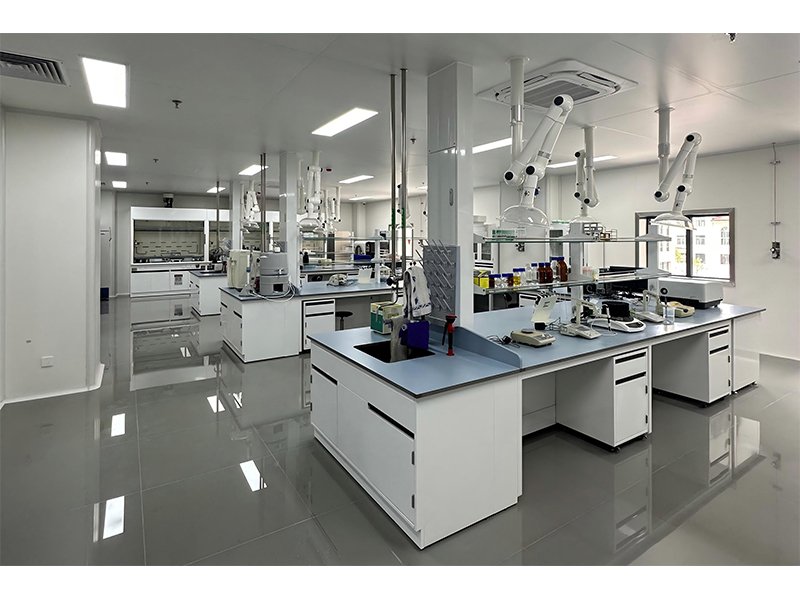
The fume extraction arm, also known as universal fume extraction hood, is an essential local exhaust ventilation device widely installed in modern laboratories. It is designed to capture harmful chemical vapors, acid mist, organic fumes and dust at the source, preventing toxic gases from spreading into the breathing zone of lab operators. Compared with large fume hoods, this flexible fume extraction arm is more economical and flexible for decentralized exhaust points where a full-size fume cabinet is unnecessary.
Our laboratory fume extraction arm adopts a built-in support frame structure. After you pull the hood to your target working position, it can lock firmly and will not sag or slowly move down during long-time operation. The outer hose can be PP or aluminum alloy. The PP version features excellent acid and alkali resistance, ideal for chemical labs with frequent corrosive reagents. The aluminum alloy type has higher mechanical strength, good temperature resistance and long service life for general organic solvent extraction.
This universal fume extraction hood supports three common installation ways. Ceiling mounting is the most popular choice for keeping the lab bench surface fully available. Wall mounting saves overhead space, suitable for narrow side benches. Bench mounting is convenient for temporary work stations and small test areas. The suction hood mouth can be round or square, and customers can choose with or without a control damper. The built-in damper allows users to manually adjust air volume easily according to the actual fume generation amount.
The fume extraction arm connects to the main exhaust duct system. It does not come with an internal fan. Negative pressure from the central exhaust fan draws contaminated air through the flexible arm and then sends it to exhaust treatment equipment such as wet scrubbers or activated carbon adsorption boxes for purification before discharging outdoors. It works perfectly with our other ventilation products to form a complete lab gas treatment system.
All joints are sealed tightly to avoid air leakage, which guarantees stable suction efficiency. Smooth inner wall of the flexible duct reduces wind resistance and noise during operation. We supply standard sizes with different diameters and arm lengths. Custom dimensions, special connection flanges and custom hood shapes are acceptable for special project needs. Strict quality inspection is carried out before packing to ensure every fume extraction arm can work reliably in continuous laboratory environments.

Application
Fume extraction arms are commonly used in chemistry laboratories, university research labs, pharmaceutical testing rooms, food inspection laboratories, electronic welding workshops, and industrial chemical test stations. They are suitable for local extraction of acid mist, solvent vapor, irritating gas and fine particulate matter generated during sample preparation, reagent mixing, heating experiments and small-scale chemical reactions.
FAQ
Q: Does the fume extraction arm include a fan?
A: No. This flexible extraction arm is only the suction hood and duct assembly. It needs to connect to an external exhaust fan or central ventilation system to create negative pressure for air suction.
Q: What material should I pick, PP or aluminum alloy?
A: Choose PP for strong acid and alkali corrosive fumes. Aluminum alloy is recommended for ordinary organic solvents and higher temperature fumes.
Q: Can the arm hold its position after adjustment?
A: Yes. It uses a mechanical joint positioning structure. Once adjusted, the hood stays in place without slipping.
Q: What installation types are available?
A: Ceiling mounted, wall mounted and bench mounted options are all available.
Product Overview
PP Duct Fan for Fume Hood series consists of three mainstream inline ventilation models: PP centrifugal duct fan, PP axial flow fan and PP diagonal flow fan. All fans are manufactured from thick polypropylene material, with excellent acid and alkali corrosion resistance. They are specially developed as supporting exhaust fans for laboratory fume hoods, widely used for corrosive chemical vapor extraction under short pipeline conditions. Compared with metal fans, PP duct fans will not rust when exposed to acidic, alkaline and organic chemical fumes, ensuring stable operation in chemical laboratory environments.
All fans in this series adopt inline duct design, which means they can be directly installed in the middle of exhaust pipelines. Compact structure saves installation space, no complicated support frame required. The flange interface matches standard lab ductwork for fast on-site assembly. Each model has different air volume and static pressure characteristics to fit different fume hood layouts and exhaust requirements. It is important to distinguish this duct fan series from our rooftop centrifugal exhaust blower. These inline duct fans are for short duct and simple fume exhaust scenarios. If your project involves long pipelines, wet scrubbers and activated carbon adsorption boxes for complete waste gas purification system, please check our rooftop centrifugal exhaust blower separately.
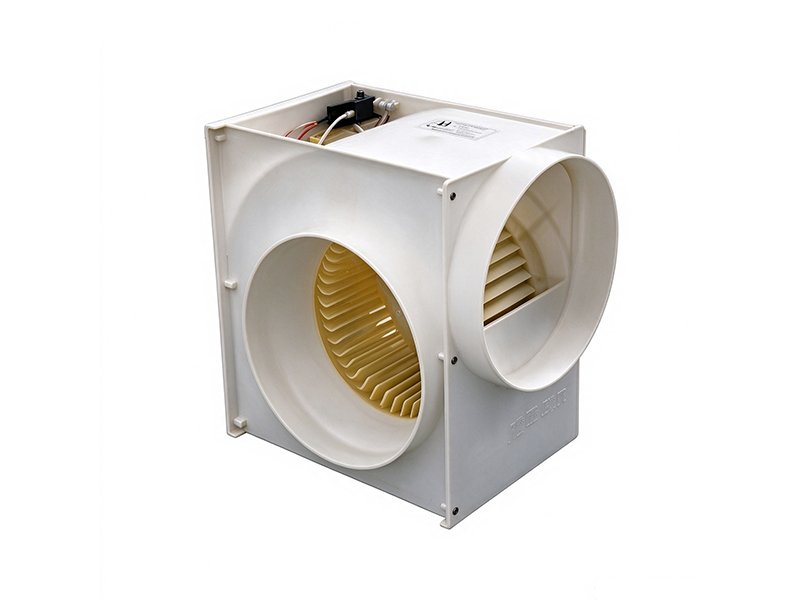
PP centrifugal duct fan is the popular option for fume hood exhaust that needs moderate static pressure. Its centrifugal impeller provides higher pressure than axial fan, which can handle a small amount of pipeline resistance for several fume hoods connected together. The square housing design is easy to install inside ceiling or duct passage. It is commonly selected by labs with 2–4 fume hoods and medium pipeline length.

PP axial flow fan features large air volume and low static pressure. It is the economical choice for single fume hood direct exhaust with very short ducts. Axial fans push gas straight along the direction of the fan axis. It runs smoothly with low noise. For small teaching labs, school chemistry rooms and simple test stations without complex purification equipment, PP axial flow fan is the cost-effective preferred solution.

PP diagonal flow fan, also known as mixed flow fan, balances the advantages of centrifugal and axial fans. Its performance sits between axial and centrifugal types. It delivers larger airflow than centrifugal duct fan while providing higher static pressure than axial fan. The cylindrical shape is suitable for limited installation space, and it is often chosen for special duct layout where neither axial nor ordinary centrifugal fan can meet the demand.
Every PP duct fan from our series is equipped with sealed corrosion-isolated motor, preventing chemical vapors from touching the motor core and extending service life. We provide multiple standard sizes with different airflow parameters. Custom specifications are available based on the quantity of fume hoods and site duct layout. Each unit will be inspected for air tightness and running test before delivery.
For laboratory clients, contractors and ventilation engineers, it is easy to select the right fan from this series according to duct length, number of fume hoods and gas concentration. This series covers most simple fume hood exhaust demands without complex waste gas treatment.
If you need corrosion resistant inline duct fan for your laboratory fume hood exhaust project, contact us to get technical parameters and selection guidance.
Application
This PP duct fan series is mainly used for short pipeline exhaust of laboratory fume hoods. It is widely applied in university teaching chemistry labs, small R&D laboratories, food testing rooms and pharmaceutical test stations. It works as the exhaust power unit to extract corrosive fumes from fume hoods and discharge gas directly. This series is suitable for simple exhaust projects without wet scrubber and activated carbon purification tanks.
FAQ
Q: What is the difference between PP duct centrifugal fan and rooftop centrifugal exhaust blower?
A: PP duct centrifugal fan is compact inline type for short ducts and simple fume hood exhaust. Rooftop centrifugal exhaust blower is heavy-duty high static pressure model for long pipelines matched with scrubber and carbon box.
Q: Which one to choose for a single fume hood direct exhaust?
A: PP axial flow fan is the economical option for single fume hood with short duct.
Q: When should I pick diagonal flow fan?
A: Choose PP diagonal flow fan when you need higher airflow than centrifugal duct fan and higher pressure than axial fan with limited installation space.
Product Overview
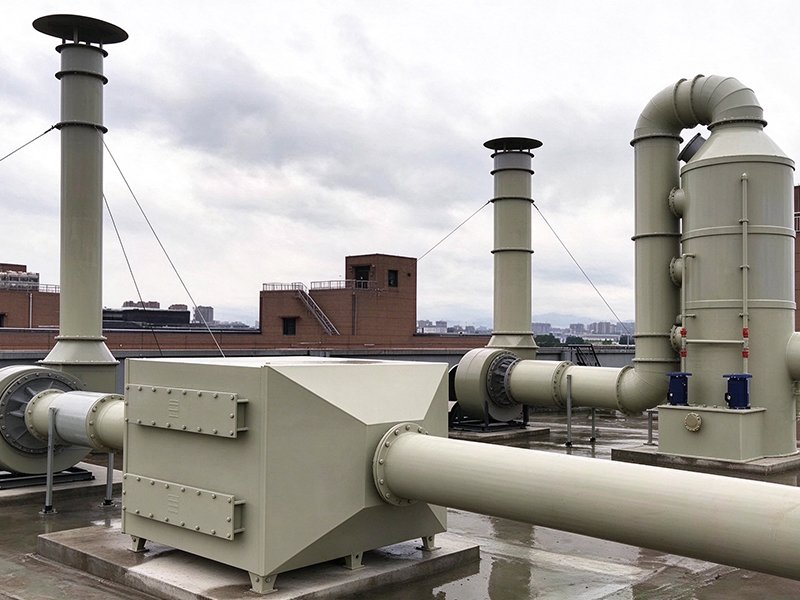
Our activated carbon adsorption box is a dry-type waste gas purification unit specially designed for laboratory exhaust treatment. It is commonly connected after wet scrubbers and centrifugal exhaust blowers in lab ventilation systems, to capture volatile organic compounds (VOCs), solvent vapors and unpleasant odors from chemical fume hood exhaust.
This adsorption box adopts physical adsorption principle. Inside the cabinet, high-density honeycomb activated carbon is filled in modular drawer trays. The porous structure of activated carbon provides huge specific surface area. When contaminated exhaust gas flows through the carbon layer, organic molecules and odor substances will be trapped and adsorbed on the carbon surface. The purified gas can then be discharged safely through exhaust stack.
We manufacture the activated carbon adsorption box with PP polypropylene material as standard option. The PP housing delivers excellent acid and alkali corrosion resistance. It will not rust or degrade when contacting residual acidic or alkaline vapors from laboratory chemical exhaust. Drawer-style carbon chamber design makes carbon replacement simple and fast. Maintenance staff can pull out the carbon trays directly without disassembling the whole pipeline system, saving maintenance time and labor cost.
Multi-stage filter structure is optional for higher purification efficiency. Pre-filter mesh can block fine droplets and dust, protecting activated carbon from contamination and extending carbon service life. Standard flange inlet and outlet are reserved on both ends of the box for easy pipeline connection. The sealed cabinet structure prevents gas leakage, ensuring all polluted air fully passes through carbon media.
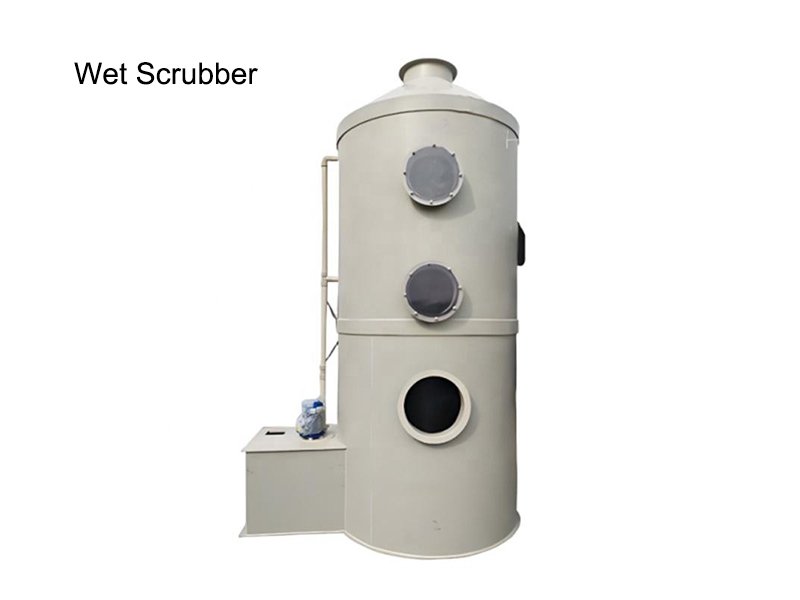
The activated carbon adsorption box is a key part of complete laboratory waste gas treatment system. It works together with fume hood, wet scrubber and centrifugal exhaust blower. The scrubber removes soluble acid and alkali gas first, then this activated carbon adsorption box removes organic solvent vapors and odor, so the final emission meets environmental discharge standards.
We supply multiple standard air flow models of activated carbon adsorption box. Custom dimensions, multi-layer carbon structure and different material options including stainless steel are available according to client’s project gas volume, gas concentration and site layout. All units are pressure tested before shipment to avoid air leakage.
For university chemistry labs, pharmaceutical R&D labs and semiconductor testing workshops, solvent vapors released during experiments bring safety risks and environmental concerns. The activated carbon adsorption box offers a cost-effective, low-energy solution for VOC treatment, compared with other thermal oxidation equipment. It runs quietly and consumes no extra power, only relying on the suction force from centrifugal exhaust blower to push gas through the carbon bed.
Our technical team can calculate the required carbon filling quantity and box size according to your exhaust air volume and VOC concentration. We also provide operation guidance and carbon replacement suggestions for long term stable running.
If you need reliable activated carbon adsorption box to complete your laboratory fume exhaust and waste gas treatment project, please contact us for technical datasheet and quotation.
Application
Activated carbon adsorption box is widely used for laboratory waste gas purification. Typical application scenarios include university chemistry laboratories, pharmaceutical testing labs, food analysis labs, semiconductor workshops and small chemical pilot plants. It is installed behind wet scrubber in lab exhaust pipeline, to adsorb organic vapors and odors after acid-alkali gas washing, helping labs achieve compliant gas emission.

FAQ
Q: What does activated carbon adsorption box do?
A: Activated carbon adsorption box uses porous activated carbon to capture VOCs, organic solvent vapors and odor molecules from lab exhaust gas, for waste gas purification before final discharge.
Q: Can it work together with wet scrubber?
A: Yes. It is commonly installed after wet scrubber and centrifugal exhaust blower. Scrubber handles soluble acid & alkali gas, then carbon box removes organic vapors.
Q: How to maintain the activated carbon adsorption box?
A: Replace saturated activated carbon regularly. The drawer-type design allows you to pull carbon trays out conveniently without cutting off pipeline.
Product Overview
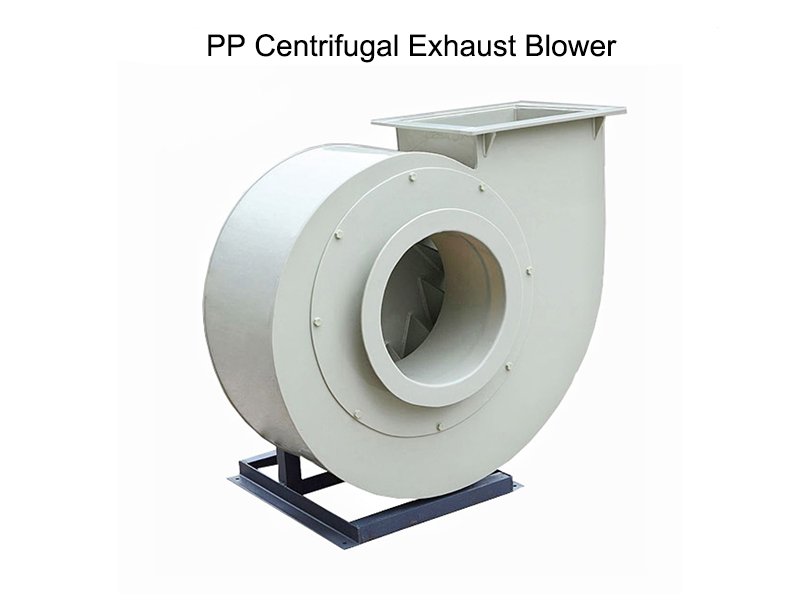
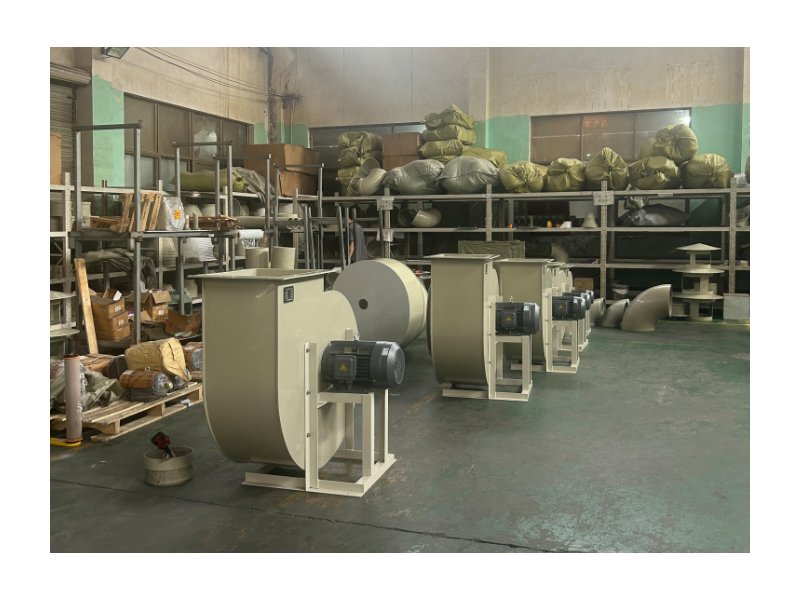
Our PP centrifugal exhaust blower is specially engineered to handle corrosive gas extraction for laboratory ventilation and waste gas treatment systems. Constructed from thick polypropylene material, this centrifugal exhaust blower will not rust when exposed to acid, alkali and chemical vapors, which makes it much more suitable for chemical labs than metal blowers.
This centrifugal exhaust blower adopts centrifugal impeller design to generate stable static pressure. It can overcome resistance from long air ducts, wet scrubbers, activated carbon adsorption boxes and pipe fittings, continuously extracting contaminated air from fume hoods and lab workstations. We supply two structural styles: side outlet centrifugal exhaust blower and rooftop upblast centrifugal exhaust blower with rain hood. The rooftop type features an integrated rain protection hood, perfect for outdoor roof installation for final gas discharge.
The motor of our centrifugal exhaust blower adopts anti-corrosion isolation design. The motor is separated from the gas flow channel to prevent corrosive fumes from touching the motor directly, extending the service life of the equipment. Heavy-duty base frame keeps the blower stable during continuous operation and reduces vibration and noise. Adjustable mounting brackets make field installation simple for lab construction teams.
Our centrifugal exhaust blower is widely matched with laboratory fume hoods, wet scrubbers, acid and alkali waste gas treatment systems, chemical pilot plants, university chemistry laboratories, pharmaceutical testing labs and semiconductor workshops. It works as the core power unit of the whole lab exhaust system, drawing polluted air through pipelines into purification equipment and discharging treated gas up to the atmosphere.
We provide multiple standard sizes of centrifugal exhaust blower, with different air flow and static pressure options to meet different project air volume requirements. Customized specifications are acceptable for special lab layout and gas treatment capacity. All units are tested before shipment to ensure stable running performance.
For laboratory projects involving corrosive chemical vapors, ordinary steel fans will suffer quick corrosion and failure. Our PP centrifugal exhaust blower solves this pain point. Low maintenance cost and long service cycle help clients reduce long-term operation investment. Our technical team can support you to select the proper model according to your required air volume, duct length and pressure loss of your ventilation system.
If you are looking for reliable centrifugal exhaust blower for your laboratory fume extraction and waste gas treatment project, please feel free to contact us for technical datasheet and quotation.

Application
Our centrifugal exhaust blower serves as the core air power equipment for laboratory waste gas exhausting. It is widely used in university chemistry labs, pharmaceutical laboratories, food testing labs, semiconductor factories and chemical pilot workshops. It works together with fume hood, wet scrubber and activated carbon cabinet to extract corrosive chemical vapors and realize qualified gas emission.
FAQ
Q: What is centrifugal exhaust blower used for?
A: Centrifugal exhaust blower is the core air extraction device, mainly used to pump corrosive waste gas from laboratory fume hoods and deliver gas through pipelines to purification equipment.
Q: Why choose PP centrifugal exhaust blower instead of steel blower?
A: PP material resists acid and alkali chemical vapor. Steel fans will be corroded quickly in chemical lab exhaust environment. PP type has longer service life.
Q: Can the blower be installed on building roof?
A: Yes. Our rooftop upblast version centrifugal exhaust blower is equipped with rain hood, specially designed for roof outdoor installation.